







ホーム > くらし > 国際交流・多文化共生 > 国際交流員のつぶやき(CIR's blog) > 山の日の出来事
ここから本文です。
山の日の出来事
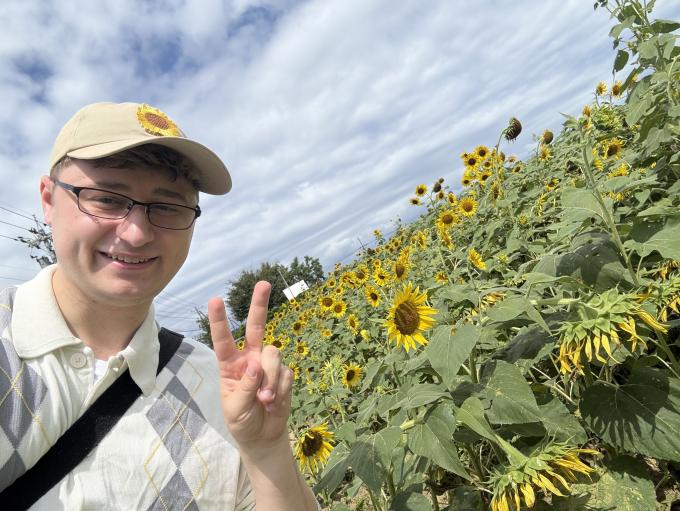
8月11日は山の日でした。七尾市に来てから初めての祝日と自然を祝うため、何かアウトドア風な活動をしようと思っていました。いろいろ考えて、私の好きな花であるひまわりの旬がもうじき終わるようなので、ひまわり畑に行くことにしました!七尾市から一番近いひまわり畑は、河北潟干拓地ひまわり村なので、電車で津幡に行ってからタクシーでひまわり村まで行きました。
到着すると、朝早く起きたことによる眠たさと炎天下の暑さが消えました。ひまわりは写真よりも美しく、何エーカーに渡って、明るいひまわりが広がっていました。タクシーから降りてすぐにカメラを出して写真を撮り始めました。空は真っ青だし、雲がたんぽぽの綿毛のように浮かんでいてその場にいた親子も喜んでいたので、最高の背景だと思いました。いつか私の家族もここまで連れていきたい!
ひまわりの迷路を歩き回っている間、「ひまわり」という言葉について考えていました。
ひまわりはいつも太陽に向かって咲いているので、「太陽に向き合っているから『日が回る』が語源なのかな」と思ったのです。それで調べてみたところ、「向日葵」という漢字が出てきて、とてもびっくりしました!漢字の意味は1字ずつ分かるのですが、なぜこういう順番で綴るのか全然理解できませんでした。もちろん、前述の通りひまわりは「日に向き合う」花です。でも、「向日葵」の代わりに「日向葵」のほうが分かりやすくないでしょうか?全くわけが分かりませんが、私の好きな花に、こんな面白い書き方があるということは嬉しい発見でした。七尾市に帰った後、すぐその日の写真を印刷して、ジャーナル(絵日記のようなもの)に貼りました。この思い出が作れたことはとても感謝しています。私が調べた漢字に関することのように、私も皆さんとこのような英語の特殊さを共有したいです!その機会を楽しみにしています。
Tuesday, August 11th was Mountain Day. Because it was my first national holiday off from work, and because the day is about celebrating nature, I wanted to do some kind of outdoorsy activity. On top of that, sunflowers are my favorite type of flower, and their season was coming to an end soon. Knowing these two things, I decided to go to a sunflower field! The closest one to Nanao is Kahokugata Sunflower Village, so I took the train to Tsubata and then a taxi from there to the village.
When I arrived, all of the tiredness from waking up early and all the heat from the blazing sun disappeared. The sunflowers were even more beautiful than in photos! The bright flowers bloomed across several acres. As soon as I stepped out of the taxi, I took out my camera and started taking pictures. The sky was a brilliant bright blue, the clouds drifted along like dandelion seeds, and families and their children enjoyed the atmosphere, making it the perfect backdrop to the day. Someday I’d love to bring my family here, too!
As I wandered around in the maze of sunflowers, I began to think about the Japanese word for sunflowers, “himawari”. Sunflowers are always turning to face the sun, so I just assume that the origin of the word must be from a combination of “hi” (sun) and “mawaru” (to spin). But, in spite of that, when I looked up the kanji online, I found “向日葵”. This totally surprised me! I understand the meaning of the kanji themselves (向=to face, 日=sun, 葵=a type of flower), but I don’t understand why they are put together like that. Of course, like I said before, sunflowers are “sunfacing flowers”. But in that case, why isn’t it written as “日向葵” (sun, face, flower) instead? I don’t understand the reason at all, but it was cool to discover that my favorite flower has this kind of special trait.
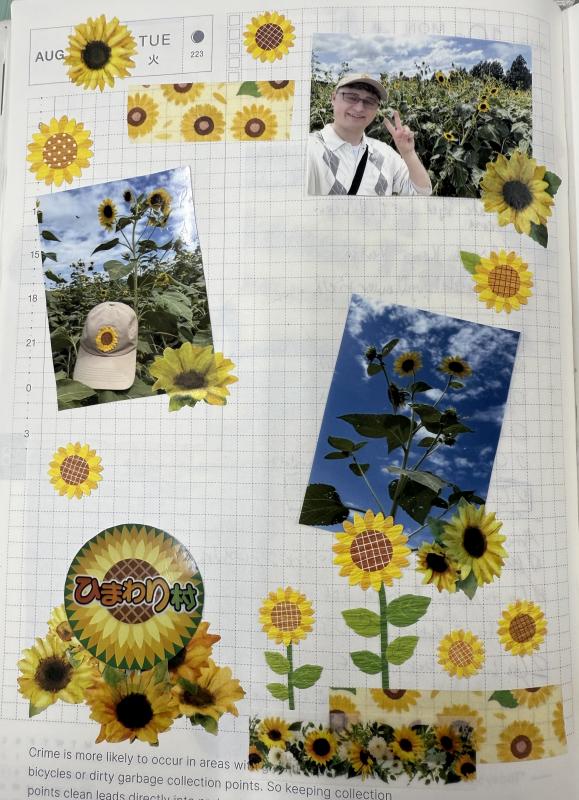
When I came home to Nanao, I printed the pictures I took and glued them in my journal right away. I’m really grateful that I was able to make this memory. Just like what I discovered about the kanji for sunflower that day, I want to share similar special qualities of English with everyone! I’m looking forward to the opportunity to do just that.